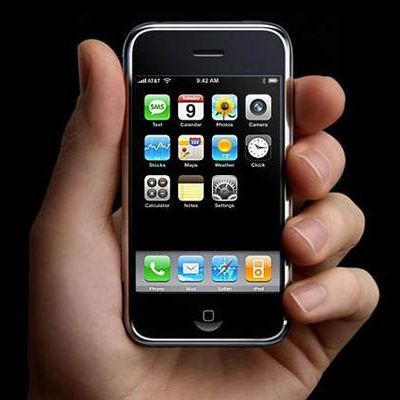
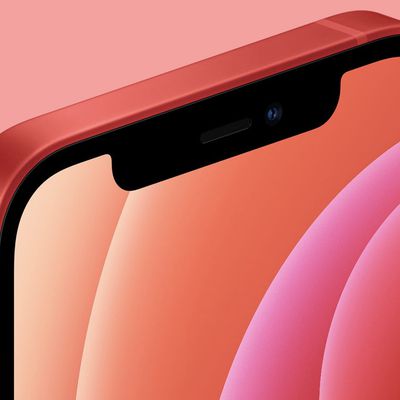
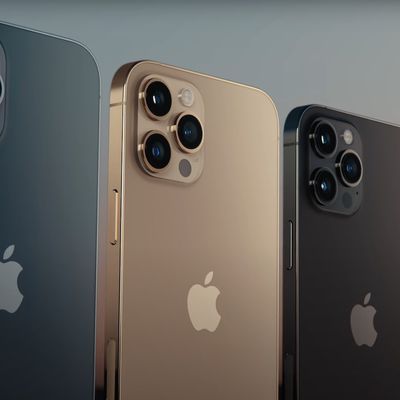
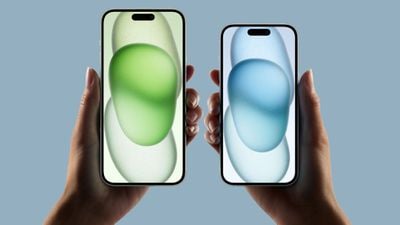
In 2007, Apple launched the original iPhone, kickstarting the modern smartphone era which is now dominated by the Apple iPhone and Google Android platforms. We've had 17 generations of iPhones so far, with the latest models, the iPhone 15, iPhone 15 Plus, iPhone 15 Pro and iPhone 15 Pro Max, introduced in September 2023. Apple typically follows an annual update cycle, introducing new high-end flagship models while often discounting prior-year models and selling them at more affordable price points.
iPhone vs Android
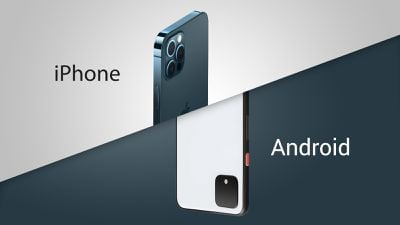
Over the years, the Android and iPhone platforms have evolved to the point where feature-wise, they're similar in function. Android smartphones are made by multiple manufacturers, but the core operating system is provided by Google, which leads to a wider variety of phones and price points to choose from, but poorer integration between software and hardware.
Apple's control of both the iPhone and the operating system (iOS) results in a more consistent experience plus ongoing support. With iOS 17, Apple supports all iPhones that were introduced in the last four years, so the majority of active iPhone owners can and do upgrade to the newest version of iOS that Apple rolls out each year.
Android updates, though, are more inconsistent and often don't make it to all Android-based smartphones because each manufacturer has to implement support on an individual basis. So while Google also does yearly Android updates, the reality is that a lot of older Android smartphones don't get the new software.
With Apple's control and curation of the iPhone experience, the iPhone is largely considered to be the more secure platform, and Apple has made it a point to focus heavily on privacy. Apple's iOS is, however, less customizable than Android, so for individuals who prefer flexibility and customization options, the Android operating system may be worth looking at.
How Do iPhone Updates Work?
Here are the basics you should know about how Apple updates the iPhone and the iOS operating system.
Each fall, usually in September, Apple releases a new series of flagship smartphones. These often come at high prices and feature the latest technologies, with Apple offering high-end models and still high-end but more affordable models. Prior-year iPhones often stick around with lower price points as cheaper alternatives to the latest and greatest technology, and occasionally, Apple launches an iPhone like the low-cost iPhone SE outside of the normal fall timeline.
At the current time, Apple's iPhone lineup includes the iPhone SE (2022), iPhone 13 (2021), iPhone 14 (2022), iPhone 14 Plus (2022), iPhone 15 (2023), iPhone 15 Plus (2023), iPhone 15 Pro (2023), and iPhone 15 Pro Max (2023).
Apple also debuts an updated version of iOS at the same time that new iPhones launch, but new versions of iOS are pre-introduced every year at Apple's annual Worldwide Developers Conference to give developers time to incorporate new features and technologies into their apps ahead of when the software becomes available to the public. The current iPhones run iOS 17.
In this guide, we go over all of the iPhones that are in the current Apple lineup, offer up some buying suggestions, and provide tips and resources for both new and existing iPhone owners.
iPhone 15 Pro and iPhone 15 Pro Max ($999+)
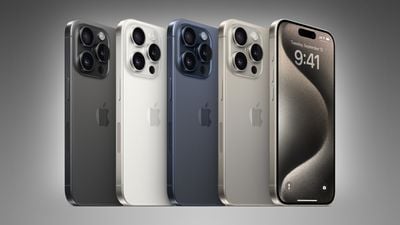
The iPhone 15 Pro and 15 Pro Max are Apple's current flagship devices with all of the top-of-the-line features and the most bells and whistles. The Pro models are for those who want to get the most out of their iPhones.
Pricing on the iPhone 15 Pro starts at $999, while pricing on the iPhone 15 Pro Max starts at $1,199. The two iPhones are nearly identical when it comes to feature set, with size, battery capacity, and 5x telephoto lens technology being the three differences between the iPhone 15 Pro and the iPhone 15 Pro Max.
The iPhone 15 Pro Max has a larger 6.7-inch display, while the iPhone 15 Pro has a 6.1-inch display. Both models look the same, but there were some slight updates to the chassis and the curve of the edges compared to last year's models.
Both iPhones have edge-to-edge OLED displays with slim bezels, a "Ceramic Shield" front cover that offers better drop protection, and a pill-shaped Dynamic Island that houses the front-facing camera technology and Face ID hardware. Apple is still using an all-glass body, but the company adopted a new titanium frame this year. Titanium is more durable and lighter weight than stainless steel.
The Dynamic Island has been incorporated into the iPhone's interface and it is able to show various notifications and app information for phone calls, timers, Face ID, Bluetooth connections, and more. The two iPhones are available in new colors that include natural, blue, black, and white titanium.
The iPhone 15 Pro and Pro Max are equipped with the A17 Pro chip, and this year, they are the only iPhones to use it. The standard iPhone 15 models have an A16 chip that was previously used in the iPhone 14 Pro models. The A17 Pro is built on Apple's 3-nanometer node, bringing notable performance and efficiency improvements. Along with up to 20 percent faster GPU performance, the chip includes support for hardware-accelerated ray tracing and mesh shading, allowing for console-level gaming.
There continues to be a three-lens camera setup with a 48-megapixel Main camera that offers improved low-light performance, a Telephoto lens, and an Ultra Wide camera, but there have been improvements to the Telephoto lens. In the iPhone 15 Pro Max, Apple is using Tetraprism technology to enable 5x optical zoom. The smaller iPhone 15 Pro has 3x optical zoom.
Crash Detection, a feature added last year, is able to determine if you've been in a serious car accident, alerting emergency services, and Apple has also added Emergency SOS via satellite. This feature allows you to get emergency help using satellites if you are out of the range of Wi-Fi and cellular.
Apple added a new Action button to the iPhone 15 Pro and Pro Max, and it can be activated to do things like launch the camera, turn on Flashlight, record a Voice Memo, or launch a Shortcut. All flagship iPhone models in 2023 have a USB-C port instead of a Lightning port, allowing them to be charged with USB-C cables like the iPad and the Mac.
Other features include IP68 water resistance, 8GB RAM, ProMotion 120Hz refresh rate, faster 5G, an upgraded second-generation Ultra Wideband chip, and MagSafe.
Key Features:
- Highest end, highest price
- Triple-lens camera: Main (Wide), Ultra Wide, and Telephoto (5x for the Max)
- 48-megapixel Main lens with ProRAW support
- Faster 5G
- A17 Pro
- Action button
- Always-On Display
- Higher-quality build materials
Bottom Line: The iPhone 15 Pro and 15 Pro Max are the iPhones to choose if you want the absolute best camera capabilities that you can get in an iPhone, with the Pro Max being the top-of-the-line model due to its increased display size, longer battery life, and 5x optical zoom Telephoto camera.
iPhone 15 and iPhone 15 Plus ($799+)
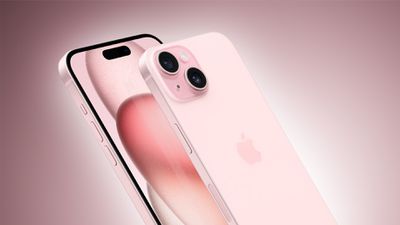
Sold alongside the iPhone 15 Pro and iPhone 15 Pro Max, the iPhone 15 and iPhone 15 Plus are Apple's more affordable flagship devices. The iPhone 15 and 15 Plus feature some of the same capabilities as the Pro models, but are not as feature-rich to keep the price tags lower. The iPhone 15 is priced starting at $799, while the iPhone 15 Plus is priced starting at $899.
Despite the size differences, the iPhone 15 and 15 Plus are essentially identical, featuring a flat-edged design with a glass body and an aluminum frame. They do not offer ProMotion display technology and thus do not support an always-on display, but Apple did bring the Dynamic Island to the standard iPhone lineup this time. There is no longer a notch, and the Dynamic Island takes up less of the screen space while still offering the same front-facing camera and Face ID functionality.
The regular iPhone 15 models and the iPhone 15 Pro models have different chips. While the iPhone 15 Pro uses an A17 Pro chip, the iPhone 15 and 15 Plus have the prior-generation A16 chip with upgraded GPU that was originally used in the iPhone 14 Pro and Pro Max.
There is a dual camera system that features an Ultra Wide and Main (Wide) lens with no Telephoto lens. Apple upgraded the Main lens in the iPhone 15 and 15 Plus, introducing a 48-megapixel camera on par with the camera used in the iPhone 15 Pro models.
The iPhone 15 models have support for mmWave and Sub-6GHz 5G and use the same X70 Qualcomm chip as the Pro models, plus they're equipped with a magnetic ring for use with MagSafe accessories. Crash Detection and Emergency SOS via satellite are available, and there is a new USB-C port that replaces the Lightning port. Compared to the Pro models, the standard models lack the titanium chassis, the Telephoto camera lens, the A17 Pro chip, and the Action button.
Between the iPhone 15 and 15 Plus, the features are identical with the exception of screen size and battery, as the iPhone 15 Plus can accommodate a larger battery size.
Key Features:
- Diagonal dual-lens camera: Main (Wide), Ultra Wide
- Crash Detection
- USB-C port
- Dynamic Island
- 5G support
- A16 chip
Bottom Line: The iPhone 15 and 15 Plus offer some of the same features as the iPhone 15 Pro and 15 Pro Max at a more affordable price. The differences are limited primarily to the camera and the display, and may not be of interest for those who are not heavily invested in iPhone photography, making the $200+ savings worth it for some people.
iPhone 14 and iPhone 14 Plus ($699+)
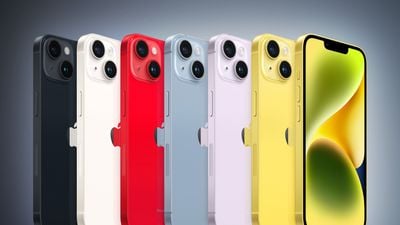
The iPhone 14 and iPhone 14 Plus are Apple's prior-generation mainstream smartphone models, and they are now offered as lower-cost options that are a generation behind the iPhone 15 models.
The iPhone 14 features a 6.1-inch display while the iPhone 14 Plus features a 6.7-inch display, and they are essentially identical in size and design to their iPhone 15 counterparts. They feature a glass body and aluminum frame, along with a notch rather than a Dynamic Island at the front for the front-facing camera hardware.
The models include a Lightning port, and they have a prior-generation A15 chip that is not as advanced as the A16 chip in the iPhone 15 models. The dual-camera system has an Ultra Wide and Main (Wide) lens, but the Wide lens is 12 megapixels rather than 48.
The iPhone 14 and 14 Plus do support Crash Detection and Emergency SOS via satellite.
Key Features:
- Diagonal dual-lens camera: Main (Wide), Ultra Wide
- Crash Detection
- Emergency SOS via satellite
- 5G support
- A15 chip
Bottom Line: The iPhone 14 and 14 Plus are prior-generation iPhones that are a year old. They do not have some of the more advanced features introduced with the iPhone 15, including the Dynamic Island, USB-C port, and 48-megapixel camera. If those features are unimportant to you, you can save some money by opting for the iPhone 14 or 14 Plus.
iPhone 13 ($599+)
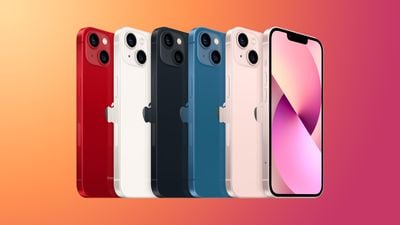
First introduced in 2021, the iPhone 13 remains in the iPhone lineup as a lower-cost two-generation-old iPhone for those who are looking to save even more cash.
Compared to the iPhone 15 and 15 Plus, the iPhone 13 has a 4-core A15 chip, 4GB of RAM instead of 6GB, and Bluetooth 5.0 instead of Bluetooth 5.3. Design wise, the iPhone 13, iPhone 14, and iPhone 15 models are largely identical in appearance with the exception of the colors.
The iPhone 13 does not have the upgraded Qualcomm X70 chip, and it lacks the camera upgrades introduced in 2022 and 2023. There's one hour less battery life, and there is no support for Emergency SOS via satellite or Crash Detection.
Key Features
- A15 chip
- 5G
- Diagonal dual-lens camera
- Cheap price
Bottom Line: The iPhone 13 is a two-year-old iPhone at a price point that's $200 cheaper than the iPhone 15 and $100 cheaper than the iPhone 14. If you're looking to save some money and don't mind hardware that's a couple of years old, the iPhone 13 may be worth considering. Compared to the iPhone 15 and iPhone 14, you're missing out on longer battery life, faster performance, camera improvements, Crash Detection, and Emergency SOS via satellite, so if you can live without those, the iPhone 13 can save you some money.
iPhone SE 2022 ($429+)
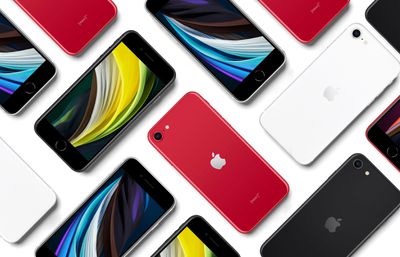
Introduced in March 2022, the iPhone SE is Apple's most affordable iPhone, and it replaces the 2020 iPhone SE.
Priced at $429, the iPhone SE is identical in design to an iPhone 8 with a 4.7-inch LCD display and thick bezels at the top and bottom of the device, housing the Home button at the bottom and the front-facing camera, speaker, and microphone at the top.
The iPhone SE is now the sole iPhone that Apple sells with Touch ID, which makes it ideal for those who prefer a fingerprint sensor to Face ID. With the discontinuation of the "mini" iPhone models in recent generations, the iPhone SE is once again the smallest iPhone available.
The iPhone SE has a glass front and back with an aluminum frame, and it supports wireless charging. Inside, it is equipped with the same 4-core A15 Bionic processor that's in the iPhone 13.
While the iPhone SE has a fast A15 chip, Apple is using lower-cost components for the rest of the device, and it is missing the bells and whistles of Apple's more expensive smartphones such as multi-lens camera setups, OLED all-screen displays, and Face ID.
Key Features:
- Touch ID
- Same A15 chip as iPhone 13
- Super low price
Bottom Line: The iPhone SE is the phone to get if you prefer Touch ID, if you're looking for a smaller device, or if want Apple's most affordable option. At $429 with an A15 chip, it's a great deal.
Frequently Asked Questions
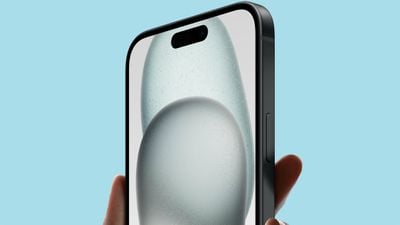
There's no one single iPhone that's best for everyone, as picking the right smartphone for you needs to take into account factors like budget, desired battery life, preferred feature set, and more.
If, for example, you're not a fan of Face ID and want to use Touch ID, you're going to want to choose the iPhone SE. If you want the absolute best photographic capabilities, you're going to want the iPhone 15 Pro Max, and if you want something that has a solid feature set at a great price, the iPhone 15 is what you'll want to look at.
Below, we've outlined some of the best iPhone choices based on different scenarios or features that you might be looking for.
Which iPhone Has the Best Battery Life?
With their more efficient A16/A17 Pro processors, the iPhone 15, 15 Plus, and 15 Pro, and 15 Pro Max have the longest battery life of Apple's iPhones.
Of the three, the 6.7-inch iPhone 15 Pro Max and iPhone 15 Plus have the longest battery life because they have the space for a larger battery.
Which iPhone Has the Best Camera?
With their updated triple-lens camera systems, 48-megapixel Main camera, and LiDAR Scanners, the iPhone 15 Pro and iPhone 15 Pro Max have the best iPhone cameras that you can get. Both of the new iPhones include a three-lens camera system, but the iPhone 15 Pro Max has a Telephoto lens with Tetraprism technology that allows for up to 5x optical zoom. The smaller iPhone 15 Pro is limited to 3x optical zoom.
The iPhone 15 Pro models do use the same 48-megapixel Main camera that was introduced with the iPhone 14 Pro, but with the A17 Pro chip, there are new capabilities. The camera features a 24mm focal length with an ƒ/1.78 aperture and second-generation sensor-shift optical image stabilization for less movement and crisper photos and videos. The lens supports 24-megapixel and 48-megapixel high-resolution photos through the Photonic Engine, rather than 12-megapixel and 48-megapixel.
Using computational photography, the Main camera can be set to 24mm, 28mm, and 35mm focal lengths to better mirror what's possible with DSLRs. These different focal lengths can be tapped when taking a photo and are reflected as different zoom levels. Apple says that the triple-lens camera and the different Main camera options are the equivalent of having seven lenses in your pocket.
Which iPhone Has Touch ID?
If you want an iPhone with Touch ID, your only option is the 2022 iPhone SE. Apple stopped using Touch ID for its flagship iPhones in 2017, and the 2018, 2019, 2020, 2021, 2022, and 2023 flagship iPhone lineups have not included an updated Touch ID iPhone.
The iPhone SE features Touch ID rather than Face ID to keep the device ultra-affordable, which is great for those who prefer using a fingerprint sensor over facial recognition.
Which iPhone is Best For One-Handed Use?
You have two options when it comes to size: 4.7 inches and 6.1 inches, with no in between. The 4.7-inch iPhone SE is Apple's smallest iPhone and it is ideal for one-handed use, but it lacks many of the upgraded features available with the flagship iPhone lineup. Apple's next smallest phone is the iPhone 13/14/15 at 6.1 inches, as the 5.4-inch iPhone 13 mini was discontinued in 2023.
Which iPhone is the Best Value?
If you want a modern iPhone with the latest chip, solid camera features, OLED display, and 5G connectivity, the iPhone 15 and 15 Plus are the best values at $799 and $899, respectively. They offer an impressive feature set at their price points, with the iPhone 15 being the best deal.
If you don't need the latest bells and whistles and don't mind losing out on a bit of performance and battery life, the iPhone 14 and 14 Plus, which are $100 cheaper than than their iPhone 15 counterparts, are well worth considering.
If you want the absolute best price and don't mind bezels, Touch ID, and an inferior camera, the iPhone SE with its A15 chip continues to be an amazing deal at $429.
For many people, the iPhone 15 and 15 Plus are the iPhones to get this year with their lower price point and modern feature set, but the iPhone 14 models are almost as good and are worth considering. If you have an iPhone 14 model already, it's not worth upgrading to the iPhone 15, but the iPhone 15 is worth checking out if you have an older model.
Which iPhone Has the Most Features?
If you want the iPhone with the most bells and whistles, that's the iPhone 15 Pro and 15 Pro Max. These iPhones offer OLED displays, triple-lens cameras, a glass body with a titanium steel frame, larger maximum storage capacities, and longer battery life.
Compared to the iPhone 15 models, the iPhone 15 Pro and Pro Max have much better camera capabilities, with the Pro Max being the best iPhone that you can get at this time because of its battery capacity and the 5x zoom lens.
In More Detail
Still not sure? We have deeper dives comparing the iPhone 15 models to each other and to the prior-generation iPhone 14 models.
- iPhone 15 vs. iPhone 15 Pro Buyer's Guide
- iPhone 14 vs. iPhone 15 Buyer's Guide
- iPhone 14 Pro vs. iPhone 15 Pro Buyer's Guide
- iPhone 15 Pro vs. iPhone 15 Pro Max Buyer's Guide
- iPhone 15 Plus vs. 15 Pro Max Buyer's Guide: 35+ Differences Compared
- iPhone 15 vs. iPhone 15 Plus Buyer's Guide: 7 Differences Compared
For full details on each phone, explore our roundups:
Upcoming iPhone Rumors
Apple is working on new "iPhone 16" models that will come out in the fall of 2024. Apple is rumored to be introducing faster A-series chips, a new Capture button, Wi-Fi 7, and new sizes for the "Pro" models. Check out our roundups for more info.
Guide Feedback
Have questions about choosing an iPhone, notice something we left out, or want to offer feedback on this guide? Send us an email here.